
Road signs
Road Sign Shapes: What Triangles, Circles and Rectangles Mean
Published
UK road signs follow a shape code: triangles warn you, circles give you orders, and rectangles give you information. Learn that system and you can work out the meaning of signs you've never revised, which is exactly what the theory test likes to check.
Here's how each shape works, with the colour rules that complete the system.
What does a triangular road sign mean?
A triangle is a warning. Red-bordered triangular signs tell you about a hazard ahead: a bend, a junction, a crossing, or something else that needs your attention before you reach it.
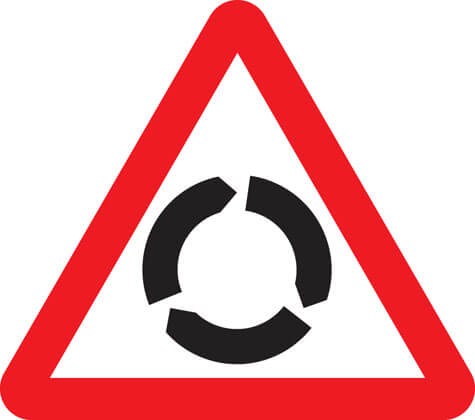
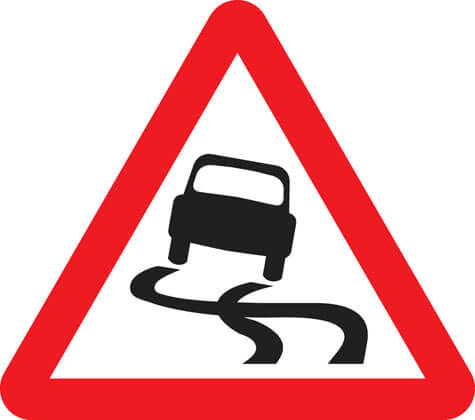
The symbol inside tells you what the hazard is. This one warns of a roundabout ahead; others warn of slippery roads, crossroads or children crossing. The sign never tells you what to do about the hazard. It trusts you to slow down and prepare.
What does a circular road sign mean?
A circle is an order, and the colour tells you which kind:
- Circles with a red ring prohibit. They tell you what you must not do.
- Blue circles instruct. They tell you what you must do.
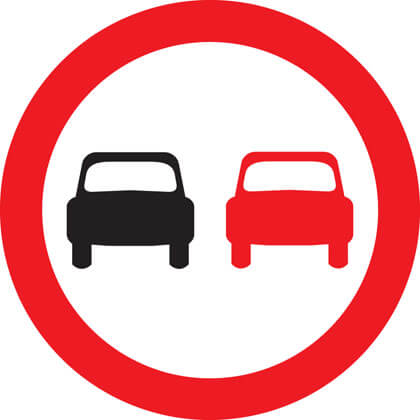
That red ring around a symbol means the activity is forbidden: no overtaking here. The same pattern covers no entry, speed limits and no stopping.
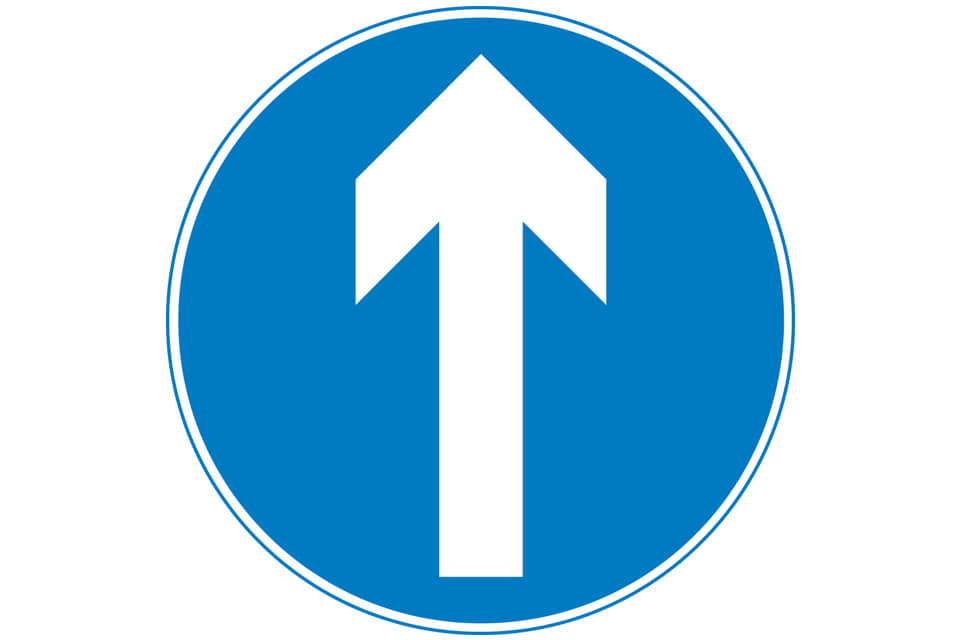
A blue circle with a white arrow is a positive instruction: ahead only, turn left, keep left. You're not being warned or advised. These are rules of the road at that point.
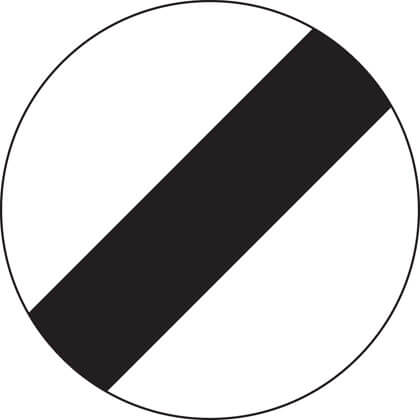
One circle worth knowing on its own is the national speed limit sign, a white disc with a black diagonal stripe. It means the national limit for your vehicle and road type applies, such as 60 mph on a single carriageway or 70 mph on a dual carriageway for cars.
What does a rectangular road sign mean?
A rectangle gives you information or directions, and the background colour tells you which network you're on:
- Blue rectangles are used on motorways, and for general information signs elsewhere.
- Green rectangles mark primary routes, the main roads between towns.
- White rectangles with black borders are used on local routes.
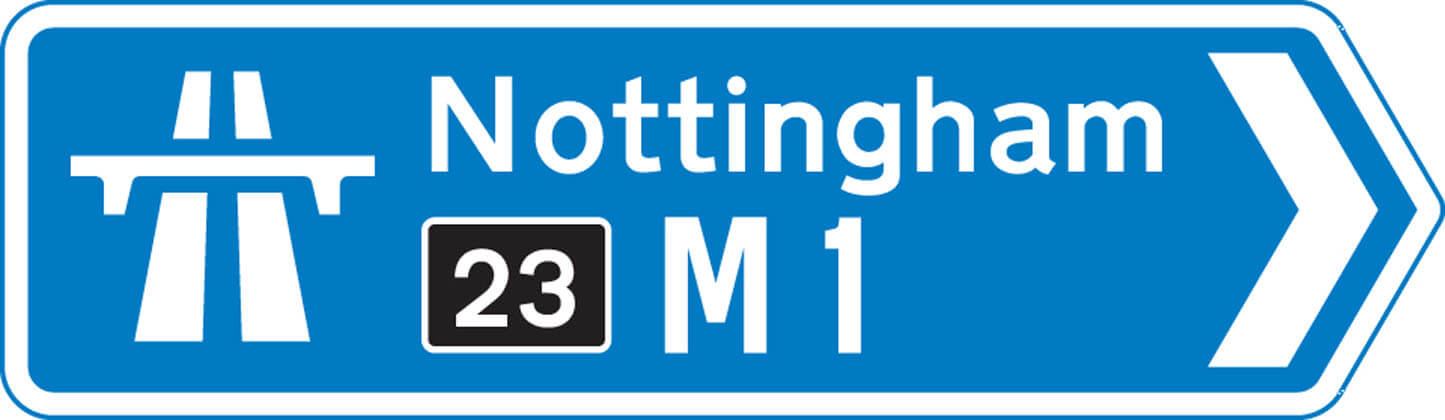
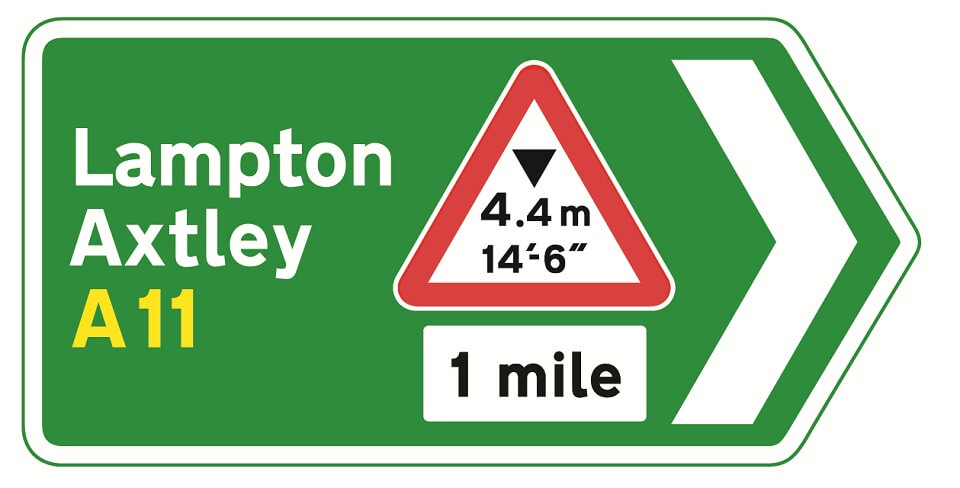
Direction signs don't warn or order. They exist so you can plan your exit, lane and route in good time.
Why is the stop sign octagonal?
The stop sign is the only octagonal sign on UK roads, and the give way sign is the only downward-pointing triangle. Both shapes are unique on purpose: you can recognise them from the shape alone, even if the face of the sign is covered in snow or dirt. That's how important stopping and giving way are.
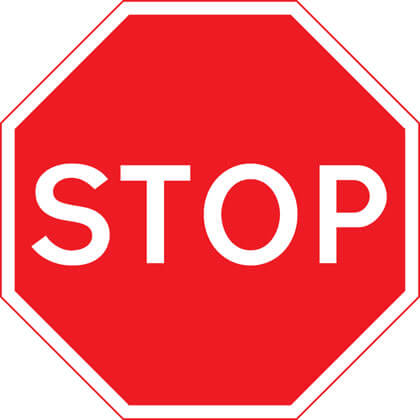
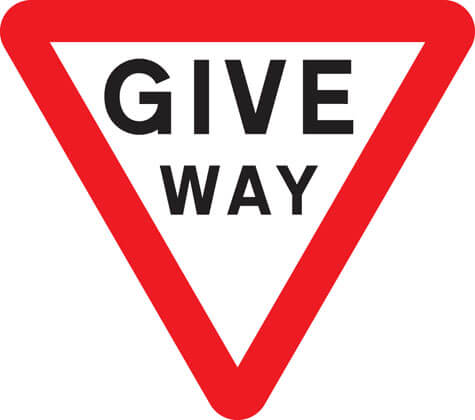
A stop sign means you must stop completely at the line, every time, even if the road looks clear. A give way sign means you must let traffic on the major road pass first, but you don't have to stop if the way is clear.
How do you remember road sign shapes for the theory test?
Three shapes, three jobs:
| Shape | Job | Colour rule |
|---|---|---|
| Triangle | Warns | Red border, hazard symbol inside |
| Circle | Orders | Red ring = must not, blue = must |
| Rectangle | Informs | Blue = motorway, green = primary route, white = local |
When a theory test question shows an unfamiliar sign, read the shape first, then the colour, then the symbol. A red-ringed circle with a lorry symbol has to be a prohibition aimed at lorries, whatever the detail. That reasoning earns marks that memorising alone can miss.
Drivingo's practice bank covers every road sign question in the official syllabus, and its sign explanations teach the system as well as the answer. Download Drivingo and turn sign questions into free marks.